Product Overview
For pan washer head TORX screws, the title specifies TORX, but the product description and images identify a cross-recess drive, so the interface needs verification before you choose a driver or approve a replacement. For a stainless steel machine screw replacement, confirm the required thread, length, head dimensions, and drive with your screw supplier against your assembly drawing.
Head & Shank
- The screw fasteners shown here have a washer formed as part of the screw body rather than a separate loose washer; check the bearing surface against the mating component.
- The rounded, wide flange head is visible in the product images, so allow for a head that projects above the surface rather than a flush finish.
- The images show a threaded shank and flat shaft end; match the thread and engagement length to the tapped hole or mating nut in your assembly.
- A silver-colored, reflective surface appears in the images, but the appearance alone does not establish the material or coating.
Configuration Details
| Product detail | Available information |
| Head form | Pan washer head |
| Drive | Title specifies TORX; description and images show cross recess; verify actual interface |
| Pan washer head TORX screws | Title specifies TORX; description and images show cross recess; verify actual interface |
| Washer | Integrated into the screw body |
| Material fields shown | Stainless steel, alloy steel, steel, brass, aluminum, nylon, other plastic |
| Finish fields shown | Zinc, clear, black zinc, green zinc, Zn-Ni alloy, Zn-Fe alloy, nickel, tinning, black oxide |
| Grade fields shown | 4.8, 5.8, 8.8, 10.9, 12.9 |
| Salt-spray field shown | Customed 12H-1600H |
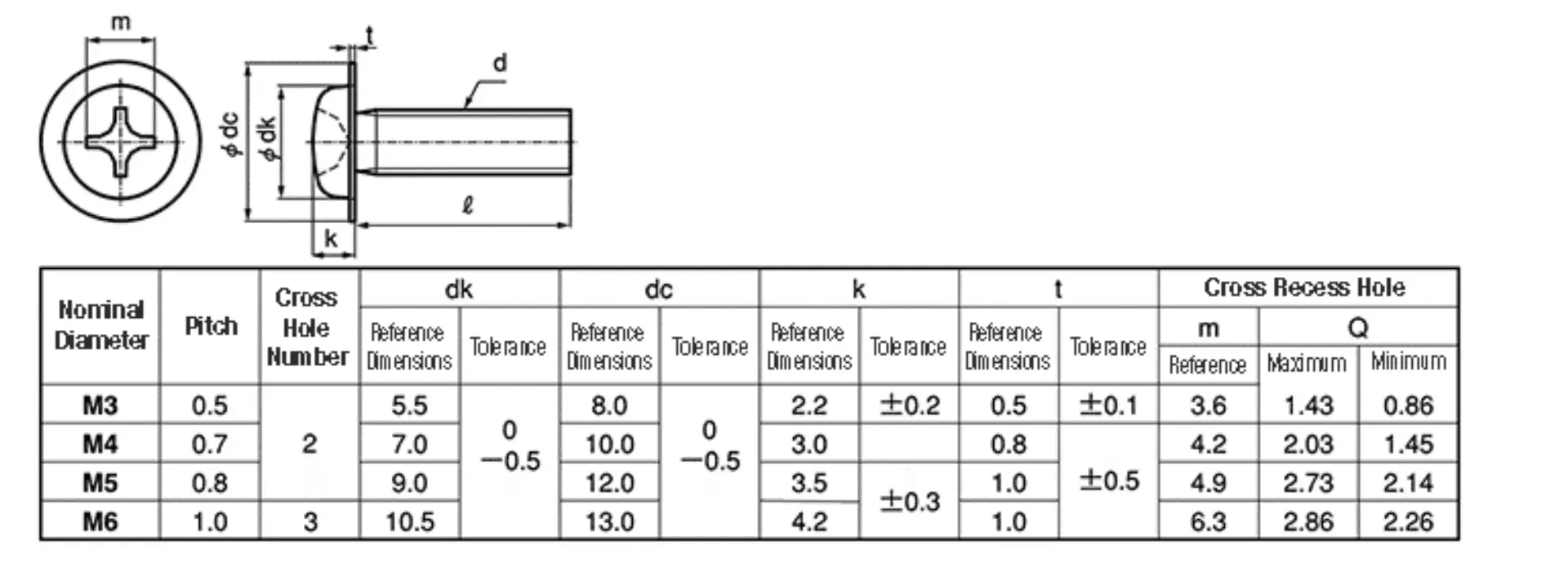
| Part-specific dimensions and combinations | Not established in the available product details |
Ordering & Delivery
We export a large number of screw fasteners to Europe, Australia, America and other countries every year. For a stainless steel machine screw order, identify the required drive, thread, length, head dimensions, material, grade, and finish with your screw supplier so the requested configuration can be distinguished from the general fields shown here. For pan washer head TORX screws, verify the drive interface before confirming the requested configuration.
Scale & Supply Capability
We are a Shenzhen-based screw supplier for standard and custom screw fasteners and electronic hardware. Established in 2010, we work with partner factories to coordinate supplier selection, sampling, quality inspection, customization, consolidation and export delivery. Our five-person team supports your project from design and sample review through mass-production supply, with OEM and ODM orders accepted. We serve customers across Europe, the Americas, Australia and other export markets.
FAQ
Is the drive TORX or cross recess?
A TORX recess has a star-shaped profile, while a cross recess has intersecting slots. Ask for a close-up of the recess on the proposed supply so the version you will receive is clear before ordering.
For a cross recess, distinguish Phillips from other cross-shaped systems such as Pozidriv. A similar appearance does not make their bits interchangeable.
During a sample fitting, check that the correct bit seats fully without being forced. Rocking or shallow engagement is a reason to investigate the fit before powered installation.
On a production line, keep the selected bit type clearly identified at each workstation. Inspect worn tips regularly, since wear can cause slipping even when the nominal bit type is correct.
For equipment that will need servicing, include the drive designation in maintenance instructions. This helps technicians bring the appropriate tool and reduces the risk of damaging the recess during removal.
What does the washer-head construction mean?
The contact beneath the head deserves attention wherever the joint includes a slot, an oversized opening, or a soft component. A broad contact face can help spread clamping force, but its performance depends on how much solid support sits underneath it.
Around slotted holes, check support throughout the intended adjustment range. A screw positioned near the end or side of a slot may have less supporting material beneath the head than one centered over a round opening.
Near a component edge, avoid leaving part of the contact face unsupported. Nearby bends, ribs, or raised features can also prevent even seating and make the joint appear tight before it is properly clamped.
On plastic parts or painted panels, inspect a trial assembly for indentation, cracking, or surface damage. Tightening settings should be established for the actual joint rather than inferred from the head shape.
An additional loose washer changes the joint stack and introduces another contact surface. Include it in the assembly assessment if it is required; the washer-style head alone does not establish vibration resistance or replace a specified locking feature.
Can I assume the listed materials and grades apply to every size?
For a stainless steel machine screw, the product details display material and grade fields, including steel, stainless steel, brass, aluminum, and grades from 4.8 to 12.9. They do not map those choices to each size or configuration, so confirm the required combination for the part.
What should I check when matching this screw to an assembly?
Thread pitch and tolerance matter as well as nominal diameter. Similar-looking screws can start into the same opening yet bind or damage the internal thread if the mating specifications differ.
In a blind hole, leave room for the screw tip beyond the intended engagement. Debris or an incomplete thread at the bottom can stop insertion early, creating resistance before the components are clamped.
For joints containing gaskets, spacers, or compressible layers, assess the assembled stack under load. Compression can change the final position of the parts, while an incorrectly supported spacer can distort a thin panel.
Behind a panel, inspect the space occupied by the installed screw tip. Cable routes, moving parts, and adjacent boards may require protection from protruding hardware even when the joint itself fits correctly.
Where components use different metals or operate in damp conditions, assess the risk of galvanic corrosion across the complete joint. The surrounding components and operating environment matter alongside the fastener selection.
Trial assembly should use representative production components. Check alignment, tightening behavior, and any required removal and reassembly before accepting a replacement for routine use.